<?xml version="1.0" encoding="utf-8"?>
<feed xmlns="http://www.w3.org/2005/Atom">
	<title type="html"><![CDATA[Forex Software — the danger of Curve-Fitting ..]]></title>
	<link rel="self" href="https://forexsb.com/forum/feed/atom/topic/9714/" />
	<updated>2024-05-02T06:04:06Z</updated>
	<generator>PunBB</generator>
	<id>https://forexsb.com/forum/topic/9714/the-danger-of-curvefitting/</id>
		<entry>
			<title type="html"><![CDATA[Re: the danger of Curve-Fitting ..]]></title>
			<link rel="alternate" href="https://forexsb.com/forum/post/79653/#p79653" />
			<content type="html"><![CDATA[<div class="quotebox"><cite>gabdecsters wrote:</cite><blockquote><p>---</p><p> Hello!</p><p> I understand your frustration with inconsistent results when testing new data.&nbsp; From what you described, it appears that your strategy may be over-adjusted to historical data, which causes it to perform poorly in previously unseen market conditions.&nbsp; I&#039;ll share how I usually approach creating and validating strategies to avoid these types of problems.</p><p> 1. **Acceptance Criteria:** I use strict acceptance criteria that include a minimum rate of return per period, a maximum acceptable drawdown, and other performance criteria such as the recovery factor.&nbsp; This helps me ensure the strategy is robust and can withstand different market conditions.</p><p> 2. **TimeFrame:** I vary the timeframe depending on the nature of the strategy, but I generally use 1-hour (H1) or daily (D1) data.&nbsp; This provides a good balance between trading frequency and sensitivity to market noise.</p><p> 3. **Data Bars / Date Range:** I typically use around 250,000 data bars to develop the strategy.&nbsp; For example, this could cover a period from 2008 to 2016. It is important not to validate the results in &#039;Walk Forward&#039; with the same data set so as not to introduce bias.</p><p> 4. **Predefined Indicators:** I tend to use indicators that do not fit the data too much.&nbsp; Preferably, &quot;broader&quot; indicators such as the simple moving average, RSI, and MACD.&nbsp; This helps ensure that the strategy is not just capturing specific anomalies in the data set.</p><p> 5. **Strategy Settings:** I always go for validation using the Monte Carlo Method and adjusting the simulator to test the robustness of the strategy in different types of market conditions.&nbsp; Then, I validate with a new set of data from the period following the original, from 2016 to the current date.</p><p> If you are seeing good results initially on new data but then experience declines, it could be a matter of overfitting or perhaps the strategy is not well adapted to more recent changes in market behavior.&nbsp; I suggest reviewing whether the indicators and entry conditions are truly aligned with the long-term characteristics of the market and not just particularities of the previous data set.</p><p> I hope these tips help improve the robustness of your strategies.&nbsp; Good luck!</p><p> ---</p></blockquote></div><p>Wow i very big thanks for your suggested, i&#039;ll try it</p>]]></content>
			<author>
				<name><![CDATA[ridwan]]></name>
				<uri>https://forexsb.com/forum/user/13718/</uri>
			</author>
			<updated>2024-05-02T06:04:06Z</updated>
			<id>https://forexsb.com/forum/post/79653/#p79653</id>
		</entry>
		<entry>
			<title type="html"><![CDATA[Re: the danger of Curve-Fitting ..]]></title>
			<link rel="alternate" href="https://forexsb.com/forum/post/79649/#p79649" />
			<content type="html"><![CDATA[<div class="quotebox"><cite>gabdecsters wrote:</cite><blockquote><p>---</p><p> Hello!</p><p> I understand your frustration with inconsistent results when testing new data.&nbsp; From what you described, it appears that your strategy may be over-adjusted to historical data, which causes it to perform poorly in previously unseen market conditions.&nbsp; I&#039;ll share how I usually approach creating and validating strategies to avoid these types of problems.</p><p> 1. **Acceptance Criteria:** I use strict acceptance criteria that include a minimum rate of return per period, a maximum acceptable drawdown, and other performance criteria such as the recovery factor.&nbsp; This helps me ensure the strategy is robust and can withstand different market conditions.</p><p> 2. **TimeFrame:** I vary the timeframe depending on the nature of the strategy, but I generally use 1-hour (H1) or daily (D1) data.&nbsp; This provides a good balance between trading frequency and sensitivity to market noise.</p><p> 3. **Data Bars / Date Range:** I typically use around 250,000 data bars to develop the strategy.&nbsp; For example, this could cover a period from 2008 to 2016. It is important not to validate the results in &#039;Walk Forward&#039; with the same data set so as not to introduce bias.</p><p> 4. **Predefined Indicators:** I tend to use indicators that do not fit the data too much.&nbsp; Preferably, &quot;broader&quot; indicators such as the simple moving average, RSI, and MACD.&nbsp; This helps ensure that the strategy is not just capturing specific anomalies in the data set.</p><p> 5. **Strategy Settings:** I always go for validation using the Monte Carlo Method and adjusting the simulator to test the robustness of the strategy in different types of market conditions.&nbsp; Then, I validate with a new set of data from the period following the original, from 2016 to the current date.</p><p> If you are seeing good results initially on new data but then experience declines, it could be a matter of overfitting or perhaps the strategy is not well adapted to more recent changes in market behavior.&nbsp; I suggest reviewing whether the indicators and entry conditions are truly aligned with the long-term characteristics of the market and not just particularities of the previous data set.</p><p> I hope these tips help improve the robustness of your strategies.&nbsp; Good luck!</p><p> ---</p></blockquote></div><p>These are excellent guidelines. Overfitting is a problem in any model training aka strategy.</p><p>Following these measures, what kind of performance you are getting? Also. Do you use multiple strategies for each pair? Does increasing number of strategies per pair smoothen the performance curve?</p>]]></content>
			<author>
				<name><![CDATA[skybasu]]></name>
				<uri>https://forexsb.com/forum/user/15019/</uri>
			</author>
			<updated>2024-05-02T00:07:30Z</updated>
			<id>https://forexsb.com/forum/post/79649/#p79649</id>
		</entry>
		<entry>
			<title type="html"><![CDATA[Re: the danger of Curve-Fitting ..]]></title>
			<link rel="alternate" href="https://forexsb.com/forum/post/79549/#p79549" />
			<content type="html"><![CDATA[<p>Yes, I confirm. It is a clear sign of overoptimisation.</p><p>The best practice is to have multiple generated strategies in store. When you have new data, test all of them.<br />You will find strategies that work well on the new data.</p>]]></content>
			<author>
				<name><![CDATA[Popov]]></name>
				<uri>https://forexsb.com/forum/user/2/</uri>
			</author>
			<updated>2024-04-25T09:18:07Z</updated>
			<id>https://forexsb.com/forum/post/79549/#p79549</id>
		</entry>
		<entry>
			<title type="html"><![CDATA[Re: the danger of Curve-Fitting ..]]></title>
			<link rel="alternate" href="https://forexsb.com/forum/post/79467/#p79467" />
			<content type="html"><![CDATA[<p>---</p><p> Hello!</p><p> I understand your frustration with inconsistent results when testing new data.&nbsp; From what you described, it appears that your strategy may be over-adjusted to historical data, which causes it to perform poorly in previously unseen market conditions.&nbsp; I&#039;ll share how I usually approach creating and validating strategies to avoid these types of problems.</p><p> 1. **Acceptance Criteria:** I use strict acceptance criteria that include a minimum rate of return per period, a maximum acceptable drawdown, and other performance criteria such as the recovery factor.&nbsp; This helps me ensure the strategy is robust and can withstand different market conditions.</p><p> 2. **TimeFrame:** I vary the timeframe depending on the nature of the strategy, but I generally use 1-hour (H1) or daily (D1) data.&nbsp; This provides a good balance between trading frequency and sensitivity to market noise.</p><p> 3. **Data Bars / Date Range:** I typically use around 250,000 data bars to develop the strategy.&nbsp; For example, this could cover a period from 2008 to 2016. It is important not to validate the results in &#039;Walk Forward&#039; with the same data set so as not to introduce bias.</p><p> 4. **Predefined Indicators:** I tend to use indicators that do not fit the data too much.&nbsp; Preferably, &quot;broader&quot; indicators such as the simple moving average, RSI, and MACD.&nbsp; This helps ensure that the strategy is not just capturing specific anomalies in the data set.</p><p> 5. **Strategy Settings:** I always go for validation using the Monte Carlo Method and adjusting the simulator to test the robustness of the strategy in different types of market conditions.&nbsp; Then, I validate with a new set of data from the period following the original, from 2016 to the current date.</p><p> If you are seeing good results initially on new data but then experience declines, it could be a matter of overfitting or perhaps the strategy is not well adapted to more recent changes in market behavior.&nbsp; I suggest reviewing whether the indicators and entry conditions are truly aligned with the long-term characteristics of the market and not just particularities of the previous data set.</p><p> I hope these tips help improve the robustness of your strategies.&nbsp; Good luck!</p><p> ---</p>]]></content>
			<author>
				<name><![CDATA[gabdecsters]]></name>
				<uri>https://forexsb.com/forum/user/14801/</uri>
			</author>
			<updated>2024-04-19T02:38:45Z</updated>
			<id>https://forexsb.com/forum/post/79467/#p79467</id>
		</entry>
		<entry>
			<title type="html"><![CDATA[the danger of Curve-Fitting ..]]></title>
			<link rel="alternate" href="https://forexsb.com/forum/post/79455/#p79455" />
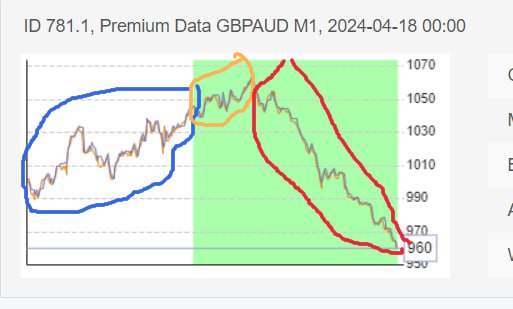
			<content type="html"><![CDATA[<p><span class="postimg"><img src="https://telegra.ph/file/c131f77eba6edffc5c6d6.jpg" alt="https://telegra.ph/file/c131f77eba6edffc5c6d6.jpg" /></span></p><p>this Strategy has passed some Test like, monte carlo, Walk Forward and Optimizing and i get strategy have Good Line (Circle Blue), but when Try it to New data (green box) , the graph is drawing good line at the frist time (Circle yellow), but at the end time is falling down(Red Circle)..&nbsp; and i get Similiar result again, again and again... </p><p>How to avoid this Case ?..</p><p>i though mybe some Special Action can avoid this Case like </p><p>1. what Acceptance Criteria do u use ?...<br />2. what timeFrame do u use ?..<br />3. how much data bars do u use, or Range Of Date?..<br />4. what preset indicator do u use at frist time?..<br />5. what setting generated like &quot;Strategy Properties&quot; or &quot;Generator Settings&quot; do u use?..</p><p>any suggest ?... </p><p>Thank you</p>]]></content>
			<author>
				<name><![CDATA[ridwan]]></name>
				<uri>https://forexsb.com/forum/user/13718/</uri>
			</author>
			<updated>2024-04-18T06:10:55Z</updated>
			<id>https://forexsb.com/forum/post/79455/#p79455</id>
		</entry>
</feed>